Corporate Christmas parties are changing. A meal and a DJ can still be a lovely way to celebrate, but many companies now want an experience that gets the whole room involved before the night becomes a standard drinks reception. A corporate game show experience gives people exactly that: a shared event, a little competition and a lot of laughter, without requiring everybody to sing, dance or stand up in front of the room on their own.
It is particularly effective for businesses with a mixed group of colleagues. Christmas parties can bring together teams who rarely work together, new starters, senior leadership, partners and guests. The entertainment needs to feel welcoming rather than cliquey. A game show creates teams, gives people a common focus and makes it easy for guests to join in at whichever level they feel comfortable.
What Does Corporate Game Show Entertainment Look Like?
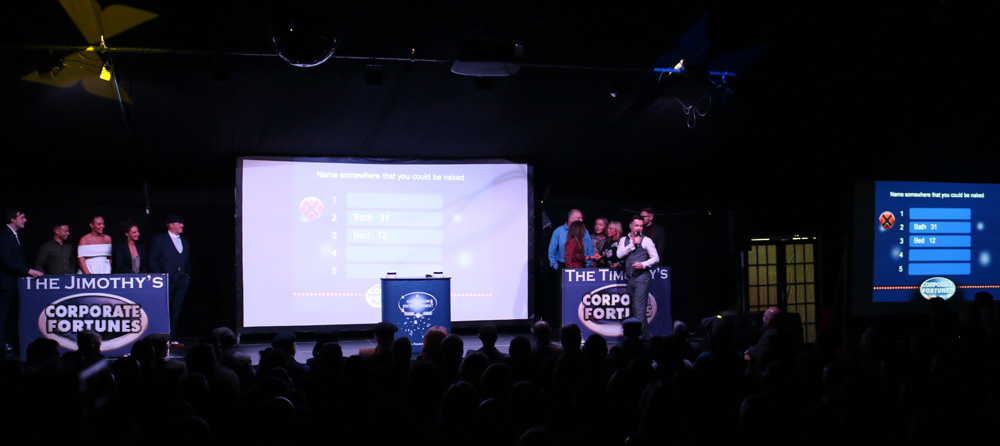
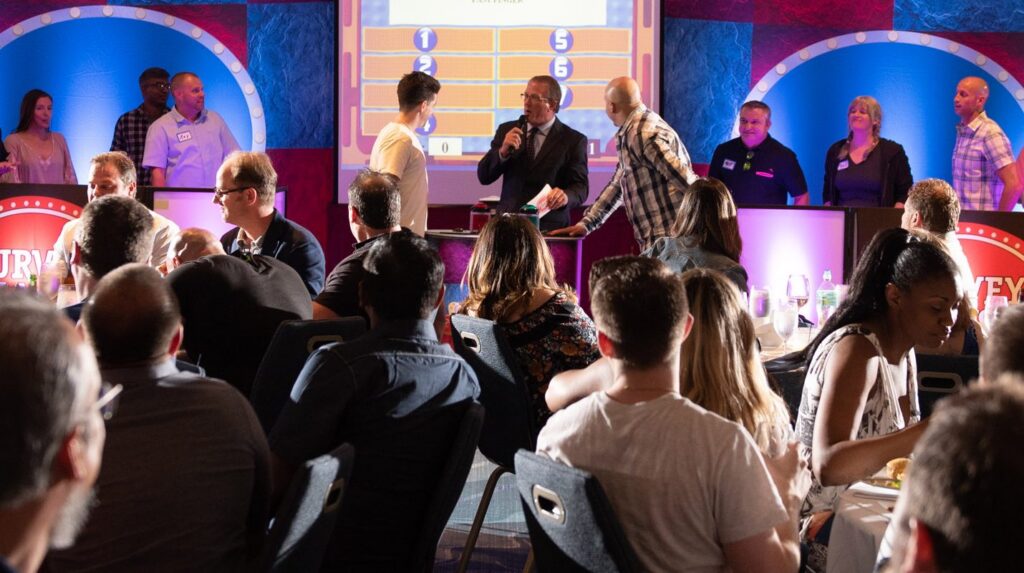
Think less pub quiz and more TV-style event. Depending on the package and venue, a professional game show can include a host, team podiums, buzzer systems, microphones, big-screen visuals, sound equipment and tailored games. The host keeps the pace moving, explains the rules and brings in different tables or teams throughout the event.
The most familiar formats often work best. Family Fortunes-style survey questions, picture rounds, music clips, catchphrase-style clues and simple physical challenges are easy to understand in seconds. The aim is not to catch people out with difficult questions. It is to create those moments where a whole table believes it knows the answer, the buzzer goes first, and everyone has something to laugh about afterwards.
Why It Works So Well at Christmas
At Christmas, many guests have already spent the day working, travelled to the venue or arrived expecting a sit-down meal. Asking them to do something physically demanding is rarely right. A game show is energetic without being exhausting. People can participate from their tables, move to the podium when they want to and stay engaged as an audience when another team is playing.
It also gives the event organiser a ready-made centrepiece. Rather than trying to fill an awkward gap between dinner and a DJ, or hoping everyone naturally mixes, there is a clear moment when everyone comes together. This can be especially valuable at larger events, where people might otherwise remain with their own department.
A Good Fit for Different Group Sizes
For a group of 20 to 40, a game show can feel personal and lively, with everyone forming a handful of teams. For 80, 150 or several hundred guests, it becomes a bigger production, with selected contestants at the front and the rest of the room contributing answers, cheering and competing from their tables. The format is flexible, which makes it useful for offices, hotels, conference venues and company-wide celebrations.
The key is to discuss numbers honestly when you enquire. A supplier can then recommend how many active teams, podiums, screens and microphones the room needs. They should also ask about ceiling height, sightlines, loading access, existing AV and whether a stage is available. These details make a significant difference to how polished the final event feels.
Tailoring the Content Without Making It Too Niche

A little company-specific content can make a game show feel memorable, particularly for an annual staff celebration. It might be a short round based on company milestones, a visual round with colleagues’ childhood photos, a “guess the department” question or themed prizes. However, it is important to keep most of the game accessible. Guests, partners and newer starters should never feel they are watching an in-joke they cannot understand.
The best approach is usually a mix: recognisable game formats, broad questions and a small number of company or festive touches. If the event has a theme, the game visuals and host introduction can also be branded to tie the room together.
➠ Looking for More Festive Entertainment Ideas? Here are 12 Corporate Christmas Party Entertainment Ideas That Get Everyone Involved
How Long Should a Game Show Last?
Most corporate game show sessions work best at around one to two hours. That gives enough time for several rounds, a final and prizes, without losing the energy in the room. It can run after a meal, before a band or DJ, or as part of a conference schedule. If you have speeches or awards, build them into the running order rather than trying to squeeze everything into the same 30-minute slot.
For a typical evening event, guests might arrive for drinks, sit for dinner, hear any company announcements, then take part in the game show before moving into a more relaxed late-evening section. Your host and event supplier can help decide whether the show should be a single block or split into two shorter halves around food.
It Is Team Building Without Feeling Like Team Building

Many companies like the connection that team activities create but do not want to label the Christmas party as a team-building day. Game show entertainment offers a useful middle ground. Colleagues work together, communicate and share a little friendly competition, but the tone remains social and celebratory.
It can be especially effective where departments do not usually mix. Organisers can create cross-company teams, put different tables together or simply encourage people to support their own group. There is no need for everyone to be confident, loud or naturally competitive. Every team benefits from a mix of quick thinkers, music lovers, film fans and people who spot the obvious answer under pressure.
Questions to Ask Before You Book
- Is the supplier available on our date, and how long do they need for set-up and pack-down?
- What equipment is included, and can it work with the venue’s existing screen, sound system or stage?
- How will the format work for our guest numbers and room layout?
- Can the games include light company branding or a festive theme?
- What do you need from us before the event, such as a running order, access times or company questions?
- Do travel, overnight stays or additional crew apply for venues further away?
The answers will help you compare suppliers properly. The lowest quote is not always the best value if it leaves out a host, technical support, sound equipment or enough setup time to make the room work.
Make Your Christmas Party One People Remember
The most memorable corporate Christmas parties have a point where the room feels united. It may be a huge answer revealed on a screen, a close final round or the moment a quiet colleague unexpectedly becomes their table’s star player. That is what a game show does well. It creates shared moments without needing an overly complicated theme or a venue full of separate activities.
If you are organising a staff Christmas party, conference dinner or end-of-year celebration, take a look at our interactive game show hire options. We can talk through your group size, venue, timing and the level of production you need, then help create an event that feels properly festive and genuinely inclusive.
Frequently Asked Questions
Yes. It is suitable for mixed-age teams and guests because people can play in groups, join in from their tables and enjoy watching the main contestants. It provides a focal point without requiring everyone to perform individually.
Yes. Hotels and function rooms are common venues. The supplier will need to check the room layout, available power, access, screen visibility and any existing AV equipment before confirming the best setup.
Yes. A small number of tailored rounds can make the event feel personal. It is usually best to balance these with broad, familiar questions that everyone can enjoy.
No. Guests can play in teams from their tables, while volunteers or selected team members take part in front. A good host will keep the format welcoming and never put people under pressure.
About The Author
Danielle McMullen brings over 15 years of experience in organising corporate events, team-building activities, and company celebrations across South Wales. Through Blue Ocean Activities and Blue Ocean Team Events, she helps businesses create engaging experiences that strengthen team relationships, encourage collaboration, and make every occasion memorable.